Q1 publikacija: Influence of Al concentration and number of deposited layers on the structural, morphological, and optical properties of ZnO thin films, with antibacterial assessment

Članice našeg Odsjeka učestvovale su u izradi novog naučnog rada objavljenog u međunarodnom časopisu Ceramics International (Elsevier), jednom od vodećih međunarodnih časopisa u oblasti naprednih keramičkih materijala i funkcionalnih tankih filmova. Posebno ističemo da je jedna od članica našeg Odsjeka prva autorica i ujedno korespondirajuća autorica rada.
Ceramics International indeksiran je u Web of Science Core Collection (SCIE), Current Contents – Physical, Chemical & Earth Sciences i Scopus bazi. Prema najnovijim dostupnim bibliometrijskim pokazateljima časopis ima Journal Impact Factor (JIF) 6,0 i CiteScore 9,1, te je svrstan u Q1 kvartil u relevantnim kategorijama nauke o materijalima.
Objavljivanje rada u časopisu ovakve međunarodne vidljivosti predstavlja značajan rezultat istraživačkog rada članova Odsjeka Fizika i doprinosi međunarodnoj prepoznatljivosti istraživanja koja se provode na Univerzitetu u Tuzli.
Sakić, Z., Modrić-Šahbazović, A., Potočnik, J., Husejnagić, D., Šehić, M., Dedić, L. and Đekić, M., “Influence of Al concentration and number of deposited layers on the structural, morphological, and optical properties of ZnO thin films, with antibacterial assessment”, Ceramics International, Elsevier, 2026.
DOI: https://doi.org/10.1016/j.ceramint.2026.09.513
Abstract
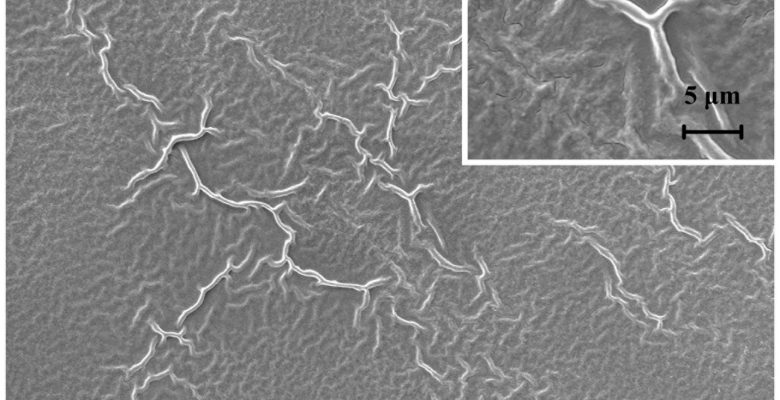
In this study, Al-doped ZnO (AZO) thin films with different aluminum concentrations (4% and 8%) and varying numbers of deposited layers were synthesized via the sol-gel spin coating method on p-type Si substrates. The influence of Al concentration and the number of deposited layers on the structural, morphological, and optical properties of the prepared films was investigated, and their antibacterial activity was evaluated as a complementary functional assessment. X-ray diffraction analysis confirmed the formation of a hexagonal wurtzite ZnO structure without detectable secondary crystalline phases. Variations in crystallite size, lattice strain, and residual stress were observed with changes in Al concentration and the number of deposited layers. The crystallite size ranged from 4.02 to 5.45 nm as determined by the Scherrer method, whereas Williamson-Hall analysis yielded values between 4.43 and 6.41 nm. SEM analysis revealed uniform, crack-free surfaces with a characteristic network-like morphology typical of sol-gel-derived films, and EDS confirmed the presence of Zn, O, and Al in all samples. Optical analysis showed that the estimated band gap energies ranged from 3.18 to 3.24 eV, exhibiting a slight increase with increasing Al concentration, whereas the number of deposited layers had no significant effect on the band gap energy. Antibacterial activity was evaluated using representative AZO films (AZO2 and AZO4) against Escherichia coli and Staphylococcus